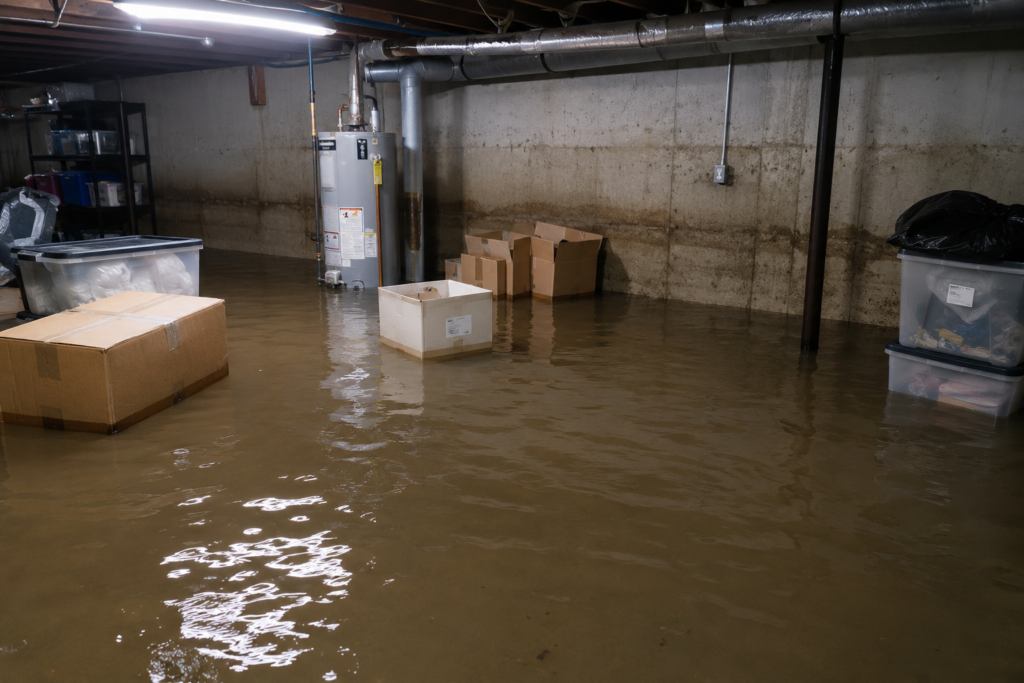
A flooded basement is one of the most stressful emergencies a homeowner can face. One moment everything is fine – the next, you’re standing at the top of your basement stairs looking down at inches of standing water covering your floor, your belongings, and everything you’ve stored down there.
The instinct is to panic. But what you do in the first hour after discovering a flooded basement determines whether this becomes a manageable cleanup or a months-long restoration nightmare involving mold, rotting structural materials, and repair bills that dwarf what immediate professional help would have cost.
This guide walks you through exactly what to do, what hidden damage to watch for, and why calling professionals for both the cleanup and the water damage restoration is the only way to fully protect your home.
Why Basements Flood – The Most Common Causes
Understanding why your basement flooded helps you prevent it from happening again. The most common causes include:
- Sump pump failure: A sump pump that stops working – due to power outage, mechanical failure, or age – is the most common cause of sudden basement flooding. Without the pump actively removing groundwater, water rises quickly around the foundation and enters the basement.
- Heavy rainfall and surface water: Intense rain events can overwhelm the soil’s absorption capacity, forcing water toward the lowest point of your property – your basement. Poor yard grading that slopes toward the house makes this significantly worse.
- Foundation cracks: Small cracks in basement walls or floor slabs allow groundwater to seep in continuously. Over time, even minor cracks widen under hydrostatic pressure and allow significant water intrusion.
- Burst or leaking pipes: A broken supply line, a leaking water heater, or a failed appliance connection can release large volumes of water into the basement quickly – sometimes while you’re asleep or away from home.
- Backed-up floor drain or sewer: When municipal sewer systems are overwhelmed during heavy rain, sewage can back up through basement floor drains – creating a Category 3 contamination situation that requires specialized remediation.
- Window well flooding: Basement window wells that lack adequate drainage collect rainwater and direct it directly against basement windows, which eventually fail under the pressure and allow water to pour in.
The First 60 Minutes – What to Do Right Now
Speed is everything after a basement flood. Here is the exact sequence to follow:
- Step 1 – Do not enter a flooded basement with live electricity: Before you take a single step down those stairs, go to your electrical panel and switch off all circuits serving the basement. Water conducts electricity — standing water near outlets, appliances, or your electrical panel is life-threatening.
- Step 2 – Identify and stop the water source if possible: If the flooding is from a burst pipe, shut off your main water supply immediately. If it’s from groundwater or rain, focus on protecting the space rather than stopping the source.
- Step 3 – Document everything before touching anything: Take photos and video of the entire basement — the water level, all visible damage, affected belongings, and any visible entry points. This documentation is essential for your insurance claim and must be done before cleanup begins.
- Step 4 – Move valuables and belongings upstairs: Electronics, documents, furniture, clothing, and anything with sentimental or financial value should be moved out of the water immediately. Every additional minute of contact with standing water increases the damage to your belongings.
- Step 5 – Begin water removal if it’s safe: Once electricity is confirmed off and the source is stopped or identified, begin removing standing water with a wet-dry vacuum or submersible pump. The faster water is removed, the less structural damage occurs.
- Step 6 – Call a professional flooded basement cleanup team: flooded basement cleanup is immediately – professional extraction equipment removes water far more effectively than any consumer tool, and the restoration process needs to begin as quickly as possible to prevent mold and structural damage.
The Hidden Damage You Can’t See
This is what most homeowners don’t fully understand – and what causes the most expensive problems after a basement flood. The water you can see on the floor is only the beginning. Within minutes of flooding, water is penetrating:
- Concrete floors and walls: Concrete is porous and absorbs water rapidly during a flooding event. Even after visible water is removed, saturated concrete continues releasing moisture as humidity for days — sustaining conditions that promote mold growth.
- Wooden subfloor and framing: Any wood in contact with floodwater begins absorbing moisture immediately. Subfloor panels swell, warp, and delaminate. Floor joists and wall framing absorb water and begin to weaken over time.
- Insulation inside walls: Wall insulation acts like a sponge, holding water against wooden framing continuously and preventing natural drying – creating a hidden wet environment that is ideal for mold colonization.
- Drywall: Drywall absorbs water from the bottom up, wicking moisture well above the visible water line. Saturated drywall loses structural integrity, develops mold rapidly, and almost always needs to be replaced.
- HVAC systems and ductwork: Flood water that enters ductwork spreads moisture and potential contaminants throughout your entire home every time the system runs – distributing mold spores to every room above grade.
According to the U.S. Environmental Protection Agency (EPA), mold begins growing on wet building materials within just 24 to 48 hours of water exposure. In a basement environment – where air circulation is naturally limited and humidity runs high – that window closes even faster than in above-grade spaces.
This is why running a few fans and assuming things will dry out on their own is never an adequate response to a basement flood. Surface drying is not structural drying – and the difference between the two is the difference between a home that recovers fully and one that develops chronic mold and rot problems.
What Professional Water Damage Restoration Involves
After a basement flood, two separate processes are needed: removing the water and restoring the structure. Here is what professional water damage restoration actually involves:
- Complete moisture mapping: Using thermal imaging cameras and professional-grade moisture meters, restoration technicians identify every area of hidden dampness – inside walls, under flooring, within structural cavities – that is completely invisible on the surface.
- Industrial water extraction: Truck-mounted extraction units remove water from concrete, carpeting, and structural materials far more powerfully than any consumer wet-dry vacuum.
- Structural drying with commercial equipment: High-capacity air movers and dehumidifiers are strategically placed throughout the affected area and monitored daily with moisture readings until all materials return to established safe dryness levels – not just until things feel dry.
- Antimicrobial treatment: All affected surfaces receive antimicrobial treatment to stop mold and bacterial growth before walls are closed back up.
- Complete documentation and insurance support: Professional restoration companies provide detailed damage reports, moisture logs, and before-and-after documentation that directly supports insurance claims and ensures you receive full coverage.
If your basement flooding occurred in the Boise, Idaho area, the team at Boise ID Water Damage provides 24/7 emergency response and handles the complete restoration process – from initial water extraction through structural drying, mold prevention, and final repairs. They work directly with insurance companies and respond fast when every hour matters.
Will Your Insurance Cover Basement Flooding?
This depends entirely on the cause of the flooding:
- Covered – sudden and accidental water damage: Flooding from a burst pipe, failed appliance, or sudden sump pump failure is typically covered under standard homeowner’s insurance policies.
- Not covered – gradual seepage: Insurance companies routinely deny claims for water damage resulting from long-term foundation seepage or slow leaks the homeowner should have noticed and addressed.
- Not covered – external flooding: Standard homeowner’s insurance does not cover flooding from outside the home – storms, overflowing rivers, or surface water runoff. This requires separate flood insurance through FEMA’s National Flood Insurance Program.
Document everything immediately after discovery, contact your insurance provider as soon as possible, and work with a professional restoration company that provides formal damage documentation — this significantly improves claim outcomes.
How to Prevent Your Basement from Flooding Again
Once your basement is fully restored, take these steps to protect it going forward:
- Install or upgrade your sump pump: A properly sized sump pump with a battery backup system is the single most effective investment against future basement flooding.
- Check and repair foundation cracks: Have your foundation professionally inspected and any cracks sealed with hydraulic cement or professional waterproofing compounds.
- Improve yard grading: The ground around your home should slope away from the foundation at a minimum of 6 inches over the first 10 feet. Soil that slopes toward the house directs every rainstorm straight to your basement walls.
- Install window well covers: Fitted covers over basement window wells prevent rainwater accumulation and direct water away from the windows themselves.
- Maintain your gutters and downspouts: Blocked gutters overflow directly against your foundation. Downspouts should discharge water at least 6 feet from the house.
- Install a basement water alarm: A simple water sensor placed on the floor near the sump pit provides early warning – giving you time to respond before flooding becomes serious.
Final Thoughts
A flooded basement demands fast, informed action – and two separate professional responses. The immediate cleanup stops the damage from spreading. The water damage restoration addresses everything the flood already caused inside your walls, floors, and structure.
Skipping the restoration step – or assuming fans and time are enough – almost always leads to mold, structural damage, and repair costs that are many times higher than what proper restoration would have cost immediately after the event.
Don’t wait. If your basement has flooded, act now – every hour of delay increases the damage and the cost of recovery.
Leave a Reply