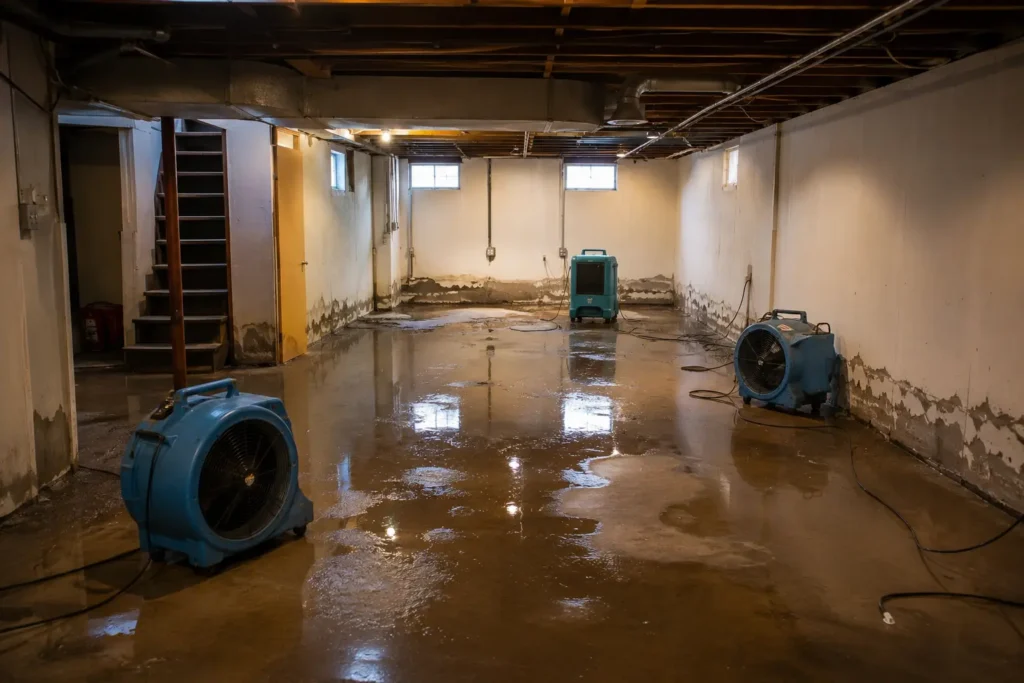
Basement water damage Peoria IL takes longer to dry than most homeowners expect – and if you’ve never dealt with it before, the timeline can catch you completely off guard. We work with homeowners across Harmon, IL and surrounding central Illinois communities every week, and Peoria is one of the most common areas we hear from after heavy spring rains or a sudden rise in the water table.
The first question almost everyone asks is not “how do I fix this” – it’s “how long is this going to take?” That’s a fair question. You’re trying to plan your life around something you didn’t ask for.
This post walks you through the real drying timeline – what affects it, what to expect day by day, and what happens when the process gets rushed or ignored.
Why Peoria and Harmon IL Basements Are Especially Vulnerable to Water Damage
Peoria sits right along the Illinois River. Every spring, when snowmelt combines with heavy rain, the water table in central Illinois rises fast. Homes built in older neighborhoods – many with block foundations or clay-heavy soil around them – absorb moisture faster than homes in drier regions. This is especially true for properties across Harmon and Peoria IL where aging infrastructure meets seasonal flooding pressure.
Add to that the humidity levels Peoria sees from May through September, and you’ve got a situation where water doesn’t just enter your basement – it lingers. The air itself slows the drying process down.
This is not a scare tactic. It’s just the reality of living in the Midwest. And it’s why basement water damage in Peoria tends to be more involved than a simple “dry it out over a weekend” situation.
The Real Drying Timeline – What to Expect Day by Day
Most water damage restoration companies will tell you 3 to 5 days. That’s accurate for moderate damage under ideal conditions. Here’s what that actually looks like:
Day 1 – Water Extraction
Standing water gets removed using truck-mounted extractors or portable pumps. This is the fastest part. Within a few hours, visible water is gone – but your walls, subfloor, and framing have already absorbed moisture. Our emergency water extraction process is designed to get equipment on-site fast before secondary damage sets in.
Day 2 to Day 3 – Structural Drying Begins
Commercial air movers and dehumidifiers get placed strategically. The goal is to move moisture out of materials – not just the air. Concrete takes longer than drywall. Block walls take longer than poured foundations. This phase is where the structural drying process matters most – equipment placement and airflow angles directly affect how fast materials release moisture.
Day 4 to Day 5 – Moisture Readings Drop
Technicians use moisture meters to check readings in the wall cavity, floor joists, and subfloor. Only when all readings fall within acceptable range is the drying considered complete.
Day 6 and Beyond – If It’s Still Wet
If readings aren’t where they need to be after 5 days, the equipment stays. This happens more often in Peoria IL during humid months because the ambient moisture in the air fights the dehumidifiers. A professional team will monitor daily rather than guess.
What Affects Drying Time – The Factors Nobody Tells You About
A few things can stretch your drying timeline significantly:
- Type of flooring – Carpet traps water underneath and is almost always a total loss. Hardwood buckles. Concrete is the most forgiving.
- Wall construction – Insulated walls hold moisture inside the wall cavity long after the surface feels dry. This is where mold starts growing if the drying stops too early.
- Time before extraction – Every hour water sits, it travels further. If your basement sat flooded for 12 hours before anyone called, expect a longer drying process.
- Season and humidity – Summer months in Harmon and Peoria are brutal for water damage. High outdoor humidity means dehumidifiers work harder and slower.
- Foundation type – Block foundations absorb water like a sponge. Poured concrete is more resistant but still porous.
The Mistake That Turns a 5-Day Job Into a 3-Month Problem
The single biggest mistake Peoria homeowners make after a flooded basement – trying to dry it themselves with box fans and a household dehumidifier.
It feels like progress. The floor looks dry. The smell fades a little. You think you handled it.
What’s actually happening is that moisture is sitting inside your walls, underneath your subfloor, and in your floor joists – completely invisible from the surface. Within 24 to 48 hours of visible drying, mold spores begin colonizing those wet materials. By the time you smell it or see it, mold has already spread behind the drywall.
At that point, what was a water damage job becomes a mold remediation job – and those cost significantly more and take significantly longer. Mold remediation after a botched DIY dry-out is one of the most common calls we get from Illinois homeowners who waited too long.
If you’re in Peoria and dealing with basement water damage, getting professional drying equipment in quickly is not optional – it’s the decision that determines how bad the total cost ends up being.
What a Professional Drying Process Looks Like in Harmon and Peoria IL Homes
A proper restoration team doesn’t just drop equipment and leave. In Illinois homes – especially older properties across Harmon and Peoria – a good crew will:
- Take initial moisture readings on every affected surface before placing equipment
- Position air movers to create airflow that moves moisture toward the dehumidifier intake
- Check readings every 24 hours and adjust equipment placement as materials dry
- Document readings daily – this matters for insurance claims
- Test behind walls if surface readings look suspiciously low
For homeowners dealing with basement water damage Peoria situations, working with a team that documents the drying process properly also protects you during the insurance claim. Adjusters want to see a moisture log – not just before and after photos. Our Harmon IL based team follows this exact process on every job – no guesswork, no shortcuts.
Mold Risk After Basement Flooding – The 48-Hour Window
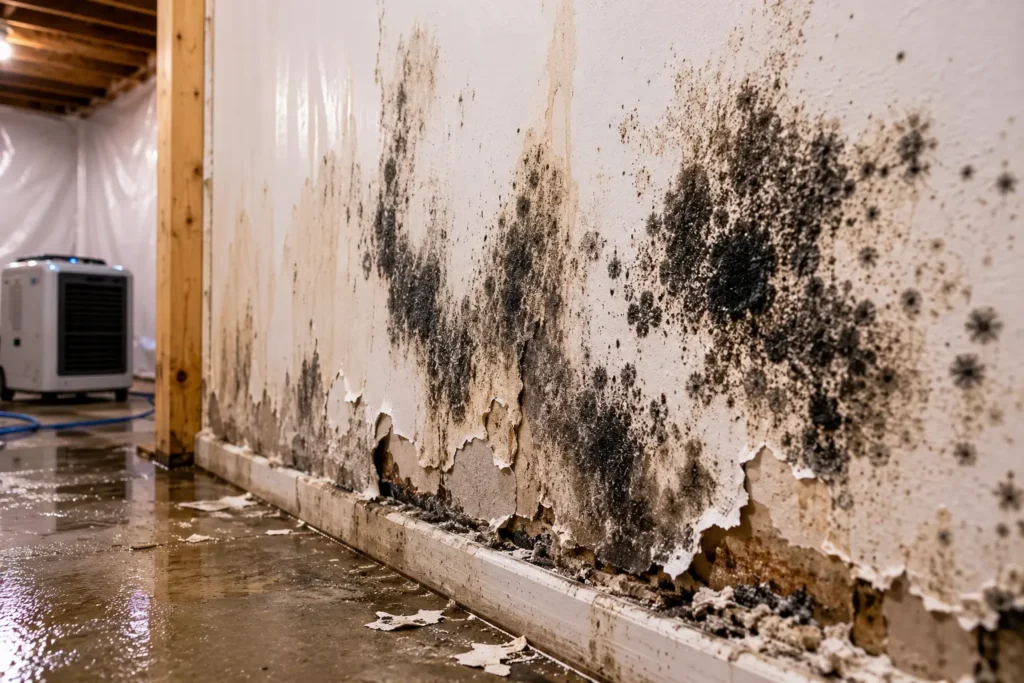
FEMA guidelines state that mold growth can begin within 24 to 48 hours of water exposure. This is why speed matters more than cost when your basement floods.
The EPA also notes that any porous material – drywall, wood framing, carpet padding – that stays wet longer than 48 hours should be evaluated for mold before being dried in place. In some cases, removal is the only real option.
Peoria IL homeowners should know that the Illinois River flooding season typically runs March through June. If your basement floods during this window, the combination of wet materials and warm temperatures creates near-perfect conditions for mold growth. Getting extraction started within the first few hours is genuinely important – not just professionally recommended language. Getting extraction started within the first few hours is genuinely important – whether you’re in Harmon IL or Peoria IL.
When to Call a Restoration Company vs. Handle It Yourself
Small amounts of water from a single pipe leak – under half an inch across a small area – can sometimes be managed with a wet vac and proper ventilation if caught immediately.
Everything else should involve professionals. Specifically, call a water damage restoration company if:
- Water came from outside (groundwater, storm drain, Illinois River flooding)
- Standing water covered more than a few square feet
- Water was present for more than 2 hours before you discovered it
- The water touched drywall, insulation, or wood framing
- You have any history of mold in the home
Illinois homeowners – from Harmon to Peoria – dealing with groundwater flooding should also be aware of basement flood restoration as a separate service category from standard water damage cleanup. The approach differs based on where the water came from, how long it was present, and what materials it contacted. A burst pipe situation is handled very differently from a basement that took on Illinois River backflow – and knowing that difference upfront saves you time, money, and a second call.
Final Thought – Drying Time Is Not the Finish Line
Getting your basement dry is step one. What comes after – checking for hidden moisture, evaluating materials for mold risk, restoring flooring and drywall – that’s the real scope of a water damage job.
The drying timeline for most Peoria IL basements runs 3 to 5 days under professional conditions. Rush it, and you’re looking at mold. Ignore it, and the structural damage compounds. Handle it right the first time, and you’re back to normal within a week or two.
That’s the actual answer to how long it takes. If you’re dealing with a flooded basement right now – whether you’re in Harmon, Peoria, or anywhere across central Illinois – call (815) 345-3139. Our team is available 24/7 and can walk you through exactly what needs to happen based on your specific situation.
Leave a Reply