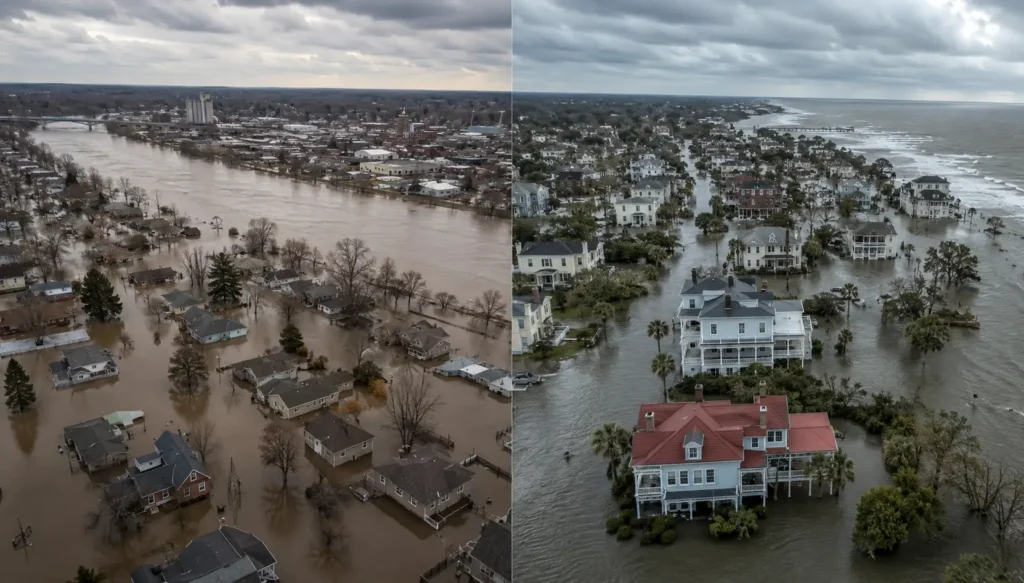
A flooded home is one of those situations where the right move depends almost entirely on where you live. The advice that works perfectly for a homeowner dealing with a burst pipe in Illinois can actually make things worse for someone dealing with storm surge in coastal South Carolina and vice versa.
Flooded home cleanup by region isn’t just about geography. It’s about understanding the water source, the local climate, the construction style of homes in that area, and how fast conditions change after the water comes in. Get those factors wrong and you’re either doing unnecessary work or missing something critical that leads to mold, structural damage, or a failed insurance claim months later.
This guide breaks it down clearly, Midwest flooding versus coastal Southeast flooding, so you know exactly what to prioritize based on where your home is.
Why Region Changes Everything About Flood Cleanup
Most general advice about flooded homes assumes a single set of conditions – clean water, temperate climate, standard construction. That describes maybe a third of actual flood situations in the US.
The reality is that flood cleanup in Harmon, IL looks nothing like flood cleanup in Charleston, SC. even if both homes have the same amount of standing water. The source is different, the contamination level is different, the drying timeline is different, and the follow-up risks are different.
Understanding your regional context isn’t just useful, it directly affects how fast you can get your home back to normal and how much the whole process ends up costing.
A few factors that shift dramatically by region:
- Water category – clean pipe water vs. river overflow vs. coastal storm surge each carry different contamination levels requiring different handling protocols
- Ambient humidity – a home in Illinois can dry significantly faster than one in coastal South Carolina simply because outdoor humidity levels differ year-round
- Foundation type – basement-heavy Midwest homes trap water differently than pier-foundation Southeast homes with crawl spaces
- Seasonal timing – spring flooding in Illinois often follows frozen ground that can’t absorb water, while coastal flooding in the Southeast can happen any month of the year
Midwest Flooding – Illinois, Iowa, Indiana
The Midwest flood season runs roughly from March through June, though burst pipes in winter create their own emergencies well before the thaw. What makes Midwest flooding unique is the combination of frozen ground, snowmelt, and heavy spring rain hitting at the same time, overwhelming drainage systems that simply can’t move water fast enough.
For Harmon, IL homeowners specifically, the Rock River’s influence on local water tables means that basement flooding after heavy rain isn’t unusual and it often comes from groundwater pushing up through the floor rather than water coming in through windows or doors. That changes the cleanup approach significantly.
Key priorities for Midwest flooded home cleanup:
- Identify the water entry point first – groundwater intrusion through a slab requires a different response than a burst pipe or roof leak. Treating them the same leads to missed moisture pockets
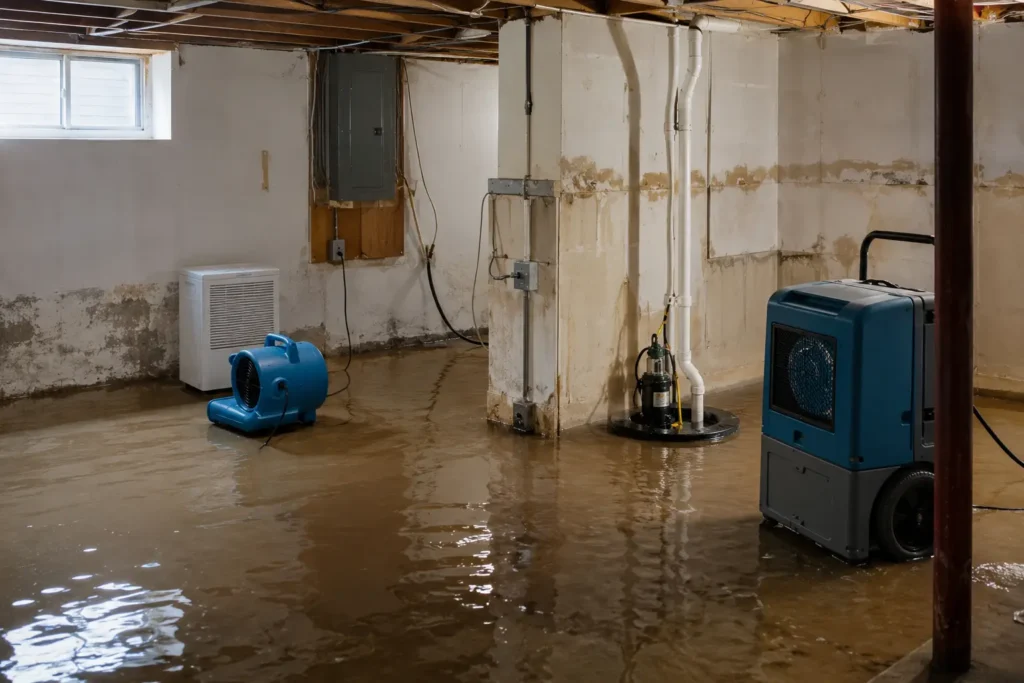
- Basements are the biggest risk – Flooded basement cleanup in finished basements with drywall, carpet, and drop ceilings requires fast action – water absorbs into these materials quickly and hides behind surfaces
- Spring humidity slows drying – running fans alone isn’t enough when outdoor humidity is already 70%+. Industrial dehumidifiers are essential, not optional
- Document before extracting – photos and moisture readings taken before cleanup begins are what insurance adjusters need. Starting work before documentation is one of the most common costly mistakes
The flood damage restoration process in Harmon follows a specific sequence extraction, moisture mapping, structural drying, and clearance testing, because skipping any step in a Midwest basement situation almost always creates a mold problem within two to three weeks.
For emergency response in Harmon and surrounding areas, call (815) 345-3139 – available 24/7 for immediate flood assessment.
Coastal Southeast Flooding – South Carolina and the Low Country
Coastal Southeast flooding operates on a completely different timeline and risk level than anything most Midwest homeowners deal with. In cities like Charleston, SC, flooding doesn’t just come from above, it comes from below, from the sides, and from tidal patterns that can push water into homes even on days with no rain at all.
King tide flooding, storm surge during hurricane season, and low-lying geography that sits at or near sea level mean that water entering a coastal Southeast home often carries sediment, bacteria, and organic material from tidal sources. This classifies it as Category 2 or Category 3 water under IICRC standards, which requires a fundamentally different response than clean water events.
Flooded home cleanup Charleston SC involves additional steps that Midwest crews may not routinely perform – antimicrobial treatment of all affected surfaces, stricter containment protocols, and faster material removal timelines because contaminated water accelerates mold growth significantly compared to clean water.
A few things that make coastal Southeast cleanup uniquely demanding:
- Contaminated water changes everything – materials that might be salvageable after a clean pipe burst often can’t be saved after storm surge contact. Carpet, drywall, and insulation that absorbed Category 3 water typically need to come out regardless of how dry they appear
- Crawl spaces flood silently – many older Charleston homes sit on pier foundations where crawl spaces fill with water and stay wet for days after surface water recedes. Without specific inspection, these areas are missed entirely
- Post-storm outdoor humidity – after a named storm or heavy flooding event, outdoor humidity in coastal South Carolina can stay above 80% for several days, which means drying timelines stretch significantly even with professional equipment running
- Mold timeline is compressed – in high-humidity coastal conditions, mold can begin establishing on wet porous surfaces in as little as 24 hours after water contact, compared to the 48-hour window more commonly cited for temperate climates
What Every Homeowner Should Do First – Regardless of Region
A few steps apply universally – whether you’re in Harmon, IL or along the South Carolina coast:
- Stop the source if possible – shut off the main water supply for pipe-related flooding. For storm and groundwater events, focus on safety first and don’t re-enter until structural safety is confirmed
- Don’t run HVAC into wet spaces – this circulates airborne mold spores through ductwork and spreads contamination through parts of the home that weren’t initially affected
- Call before touching anything significant – moving saturated materials before structural drying process and moisture mapping begins means losing the documentation that insurance adjusters require
- Emergency water extraction within the first few hours is critical – every additional hour of standing water contact increases absorption depth into floors, walls, and structural framing
According to FEMA’s flood cleanup guidelines, homeowners should never return to a flooded property without first confirming it’s structurally safe and contaminated floodwater situations require professional assessment before any cleanup work begins.
The Takeaway
Flooded home cleanup by region isn’t a small difference, it’s often the difference between a three-day job and a three-week project. Midwest homeowners dealing with basement flooding need to move fast on extraction and dehumidification before finished surfaces trap moisture permanently. Coastal Southeast homeowners face contaminated water, compressed mold timelines, and crawl space risks that require professional assessment within hours, not days.
Wherever you are, the first 48 hours set the outcome for everything that follows. Act fast, document everything, and work with crews who understand the specific risks of your region, not just water damage in general. If you’re in the Harmon area dealing with a flooded home right now, call (815) 345-3139 for immediate 24/7 response.
Leave a Reply