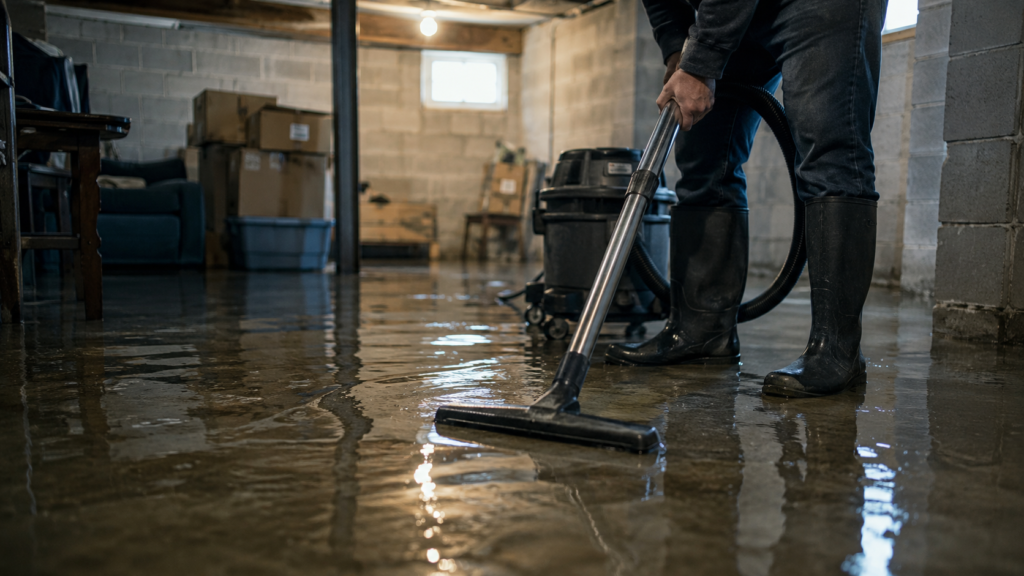
A flooded basement has a way of turning a quiet evening into a crisis. Water is creeping across the floor, you’re not sure where it’s coming from, and you’re standing there with a wet vac in one hand wondering if you can actually handle this yourself or if you need to call in help right now.
The honest answer is: it depends on how much water you’re dealing with, how long it’s been sitting, and what it touched on the way in. Below is a practical breakdown of what you can reasonably tackle yourself, what’s better left to professionals, and how to tell the difference before you’re knee-deep in it.
How Much Water Are You Actually Dealing With?
Not all basement flooding is created equal, and the amount of water is the single biggest factor in deciding your next move.
A small amount of standing water – think a leaking water heater, a minor sump pump malfunction, or rain seepage that left an inch or less pooled in one corner – is often manageable with a wet/dry vacuum, fans, and a dehumidifier, provided you act within the first few hours.
Several inches to a few feet of water, especially from a sewer backup, storm surge, or a burst pipe that ran for hours unnoticed, is a different situation entirely. At that volume, you’re not just removing water — you’re dealing with saturated drywall, soaked insulation, waterlogged flooring, and potentially contaminated water that’s been sitting in contact with sewage lines, soil, or chemicals stored in the basement.
A simple rule of thumb: if you can clean it up with a mop and a shop vac in under an hour, DIY is reasonable. If you need a sump pump, a truck-mounted extractor, or more than a day of drying time, it’s time to call a professional water damage restoration team.
The Clock Matters More Than You Think
Mold doesn’t wait for you to figure out a plan. In most conditions, mold colonization can begin within 24 to 48 hours of water exposure on organic materials like drywall, wood framing, and carpet padding. This is the part of basement flooding that catches people off guard – the visible water might be gone in a day, but if the wall cavities, subfloor, or insulation are still damp, you’ve created the perfect environment for mold to take hold behind the scenes.
This is where DIY cleanup quietly fails even well-intentioned homeowners. Surface-drying a wet basement with a few box fans might look like a fix, but moisture trapped inside walls and under flooring isn’t visible – and it’s exactly what professional-grade moisture detection and structural drying equipment is built to find and address. If your basement flooded more than a day ago and you’re only now reading this, that’s a strong signal to bring in a professional rather than continue drying it out on your own.
What You Can Safely Handle Yourself
If you’re dealing with a minor, clean-water incident, here’s what’s realistically within reach for most homeowners:
- Removing standing water with a wet/dry shop vacuum for small volumes
- Running fans and a dehumidifier to accelerate drying once standing water is gone
- Moving and elevating belongings off the floor to prevent further saturation
- Disposing of obviously ruined porous items like cardboard boxes or soaked carpet padding that have no real salvage value
- Monitoring for odors or discoloration over the following week, which can indicate hidden moisture or early mold growth
If you go this route, a moisture meter is worth the $20–$30 investment – it’s the only way to confirm that drywall, baseboards, and subflooring have actually returned to a safe moisture level, rather than just feeling dry to the touch.
When You Need to Call a Professional
Certain situations move from “weekend project” to “call someone now” territory immediately, regardless of how much water is involved:
Contaminated water. Sewage backups, water that’s touched soil or runoff from outside, or anything carrying an odor of waste needs to be treated as a biohazard. This isn’t a job for household cleaning supplies – it requires proper biohazard and contaminated water cleanup protocols, including PPE, antimicrobial treatment, and often disposal of affected porous materials that can’t be sanitized.
Water has been sitting for more than 24–48 hours. Once you’re past this window, mold risk rises sharply, and what looked like a water problem can quietly become a mold remediation problem. At that point, you need both water extraction services and likely a mold inspection and remediation assessment, not just a cleanup.
Structural materials are saturated. Drywall that’s swollen or crumbling, insulation that’s visibly waterlogged, or subflooring that feels soft underfoot all need to be assessed and likely removed by someone experienced in structural drying – guessing wrong here means mold or rot showing up months later behind a wall you thought was fine.
Electrical systems were exposed to water. If outlets, the electrical panel, or any wiring in the basement came into contact with water, don’t troubleshoot this yourself. Get it inspected before the power is restored to that area.
You’re filing an insurance claim. Professional restoration companies document damage properly — photos, moisture readings, timelines – which significantly strengthens a claim. DIY cleanup, while well-intentioned, often destroys the evidence an adjuster needs to approve your claim at full value.
The Real Cost Comparison
It’s tempting to think DIY cleanup is the cheaper option, and for very minor incidents, it usually is. But the math changes fast once you factor in what professional equipment actually does that consumer tools can’t: industrial dehumidifiers that pull moisture from materials (not just air), thermal imaging to find hidden wet spots, and antimicrobial treatments that prevent mold before it starts.
A homeowner who DIYs a moderate flood and ends up with mold remediation six weeks later – plus replaced drywall, flooring, and possibly health concerns from mold exposure – almost always spends more than if they’d called a professional restoration company on day one. The upfront professional cost is real, but it’s frequently cheaper than the compounding cost of getting it wrong.
If you’re outside the immediate area and searching for help with a similar situation, restoration teams like Port St. Lucie Water Damage handle exactly this kind of assessment – figuring out fast whether a flooded basement or water-damaged space needs DIY drying or full-scale extraction and remediation.
The Bottom Line
DIY basement cleanup works fine for small, clean-water incidents caught early. The moment you’re dealing with significant volume, contaminated water, water that’s been sitting more than a day, or any sign of mold, you’re better served calling in professionals who have the equipment and experience to do it right the first time. When in doubt, a quick call for an assessment costs you nothing and can save you from a much bigger problem down the road.
If your basement has flooded and you’re not sure which category you’re in, reach out to our team for a fast evaluation – we’ll tell you straight whether this is a job you can handle yourself or one that needs professional attention.
Leave a Reply